Relationships are about connections. Remember to take the time to connect with people on every level if you truly want to build a network of friends and support.

One challenge that I face is having time for personal relationships without taking away from caring for my partner. I need to find ways to be with people who know me as a person because they remind me that there is a world away from our lives with Parkinson’s. And so, I work at building stronger relationships and keeping things going. It may be meeting a friend for happy hour or another for lunch, people who know me for reasons other than my husband’s diagnosis. The friendship and support they can offer helps me remember who I am and it is vital for me to find time for them.

While it is great to maintain connections with friends from the “outside” world, I also need people around me who understand and share in our journey. These are the people who can laugh with me at the absurdity of some of the situations I find myself in, and yet be ready to share an encouraging word or a hug when things get tough. I definitely want to know people who get it, whatever it might be on any particular day when living with someone with Parkinson’s.

Opening up to others is not easy for me and yet it has been essential in my journey. Isolation can be as devastating to the CarePartner as it is to the person with Parkinson’s, I know because for the first few years after his diagnosis, I was living it. I was still working and many had social interactions but few on a meaningful level. When I was finally able to start reaching out to others around me, it was like coming home. My personal connections are now what keep me sane and I am thankful everyday for all my friends and the support we share.
Especially on those days when you feel rushed, take a moment to breathe and refresh your thoughts and spirit so you can move forward in a more positive and relaxed way.

Frustration often comes when I am trying to get something done in a hurry. If I can just slow down and catch my breath, think about what I am trying to do, and then act, it always goes much better.

One thing that my husband says about his diagnosis is “the hurrier I go, the behinder I get”. He understands that PD slows down all of his movements and if he tries to fight against that, it simply becomes more difficult. The same holds true for me when I am trying to help him. If I push or rush him, he gets flustered and I get frustrated. Instead, we need to remember to allow adequate time for tasks and take our time to do them right.

I told someone once that I thought I was put on this earth to learn patience and it has been a challenging lesson. Whenever I begin to feel frustrated with my husband because things are not moving as quickly or in the way I want them to, I need to stop and remember that he is the one with the disease and he is doing the best he can. I need to take a breath and remember that his is the real battle, I can only support from the sidelines and do it with love and patience.

Being active is the most important key to improving your mood and feeling better overall. Getting up and doing something everyday, whether it is with or without your partner, will help protect your physical and mental health.

The older I get and the further we go on our PD journey, the more important it is for me to be active. I try to find things that make me move with purpose every day. That means stretching, walking, yes exercising, to keep my brain and body healthy so that I can be ready to provide the support and help my partner will need.

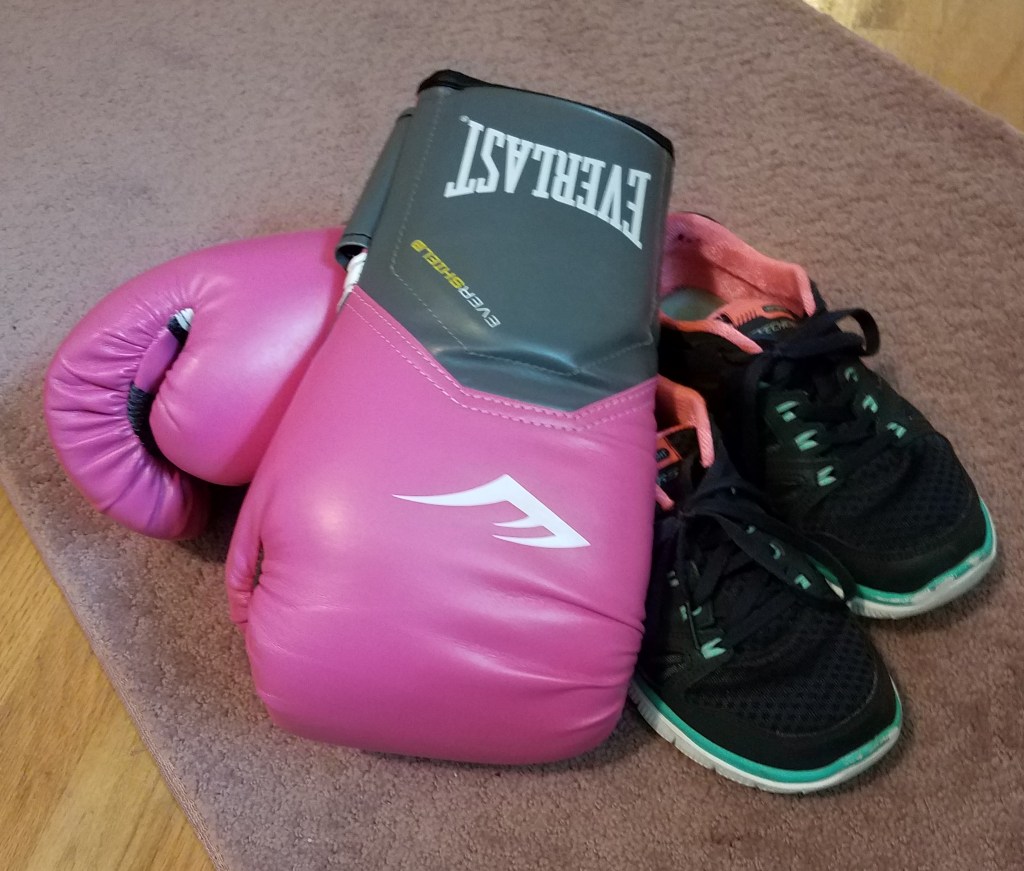
There are many reasons to stay active as we age. They range from the basics like increasing blood and oxygen flow to the brain in support of your mental processes to building a strong body and healthy immune system to keep illness away. Since I started participating in Rock Steady Boxing with my partner 2 years ago, I have not had a cold or flu bug. I may have muscle aches and pains from the workouts, but those pass, and I am feeling stronger every day.

Whether it is joining a gym or just taking a walk around the neighborhood, give yourself the gift of movement. You, and your body, will be happy you did.

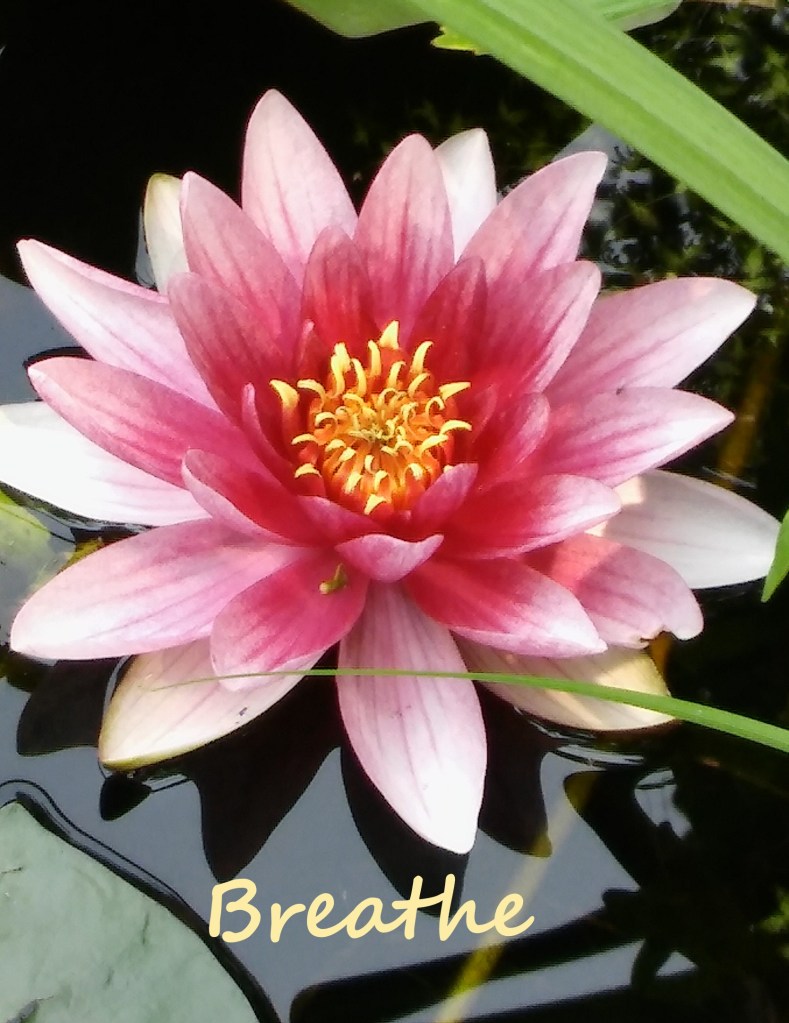
My positive thought for today is Breathe. When everything seems to be overwhelming you, take a moment, close your eyes, and take a deep gentle breath. This kindness to yourself allows you to put life back into perspective and take your next step.

I once worked as the billing and collections manager for a dental office. While most of the time, it was great, there were those days every month when I had call patients whose accounts were in arrears and ask for payment. They were the calls no one wants to get and could be painful for the patients and for me. Our office manager taught me the best trick ever and I still use it to this day. She taught me that between each call I should take a moment, close my eyes and take a deep, gentle breath to clear my mind and let go of negative energy. Then she proceeded to surround my workspace with little signs that said “Beathe”. It worked.

There are times when I hear unkind words coming out of my mouth and wish that I had followed this simple advice. Parkinson’s Disease is frustrating, for the person who has it and for the people around them. I see changes happening to the one I love and I can’t stop them. There are times when I realize that life for us has changed and it is not for the better, no matter how hard I try to put a positive spin on it all. When those difficult moments hit me, if I can just take the time to catch my breath and refocus my thoughts, I can respond in a much more productive and healthy way for both of us.

Find a strong foundation, whether it is a greater being or a belief in the love that surrounds you, and hold tight. Having a connection to something bigger than ourselves definitely can help as we struggle to make it through.

I am familiar with the philosophies of several different 12 step programs, having helped others as they faced their demons over the years, and completely agree with the concept that you must believe in something bigger than yourself. For some the belief focuses on a god or goddess figure, for others it may be science and this incredible natural environment that we live in. I think for me it is a combination of the two, as I find myself looking to the universe for divine guidance.

Many of my friends in the PD community have ties to churches through their faith, I used to be connected to a local congregation but have let it go. It was a good community but I felt that I was living a lie since my questions often outnumbered the answers I was finding there. Instead I find strength in my loving relationship with my husband and in the amazing PD community that surrounds us. It brings me peace to know that when something challenging happens, I can reach out to others who are facing similar issues for understanding, help and hope.

My foundation is the love I see on my husband’s face when we wake every day and the friendship and support I get from friends and family. While some programs encourage 12 steps, the only steps I needed to take in my life were to accept that I couldn’t face this alone, then to reach out to the strength and love of the people around me. I will always be so thankful that I did.

I won’t let negative external factors change my positive internal feelings. Bad things are going to happen, I can’t let them take me down.

We just got a tax bill for almost $2500…but the sun is still shining and life must go on. When the world seems to kick us in the teeth, we need to come back with a smile and, as that old saying goes, keep on truckin’.

Negative things happen everyday- the food I prepare is difficult for my husband to eat, he has a hard time getting dressed, the sun isn’t shining when we go out for our walk. I can let these things get to me and spoil our day, or I can let them go and focus instead on what is going right, we are sharing a meal together, he is still able to dress himself, and we live in a nice neighborhood where walking is a pleasure.

When you live with someone who has a chronic illness, it is often easier to see the negative side of things as you watch their symptoms progress. If I do that, I am not going to be a help to him or to myself. Instead I need to look for the positive, what we can still do and the adventures we have ahead. Life is always worth living as long as we don’t give up!

Denial is not a healthy place for you or your loved one. Acknowledge, accept and respect where you are in the journey at all times and you will find your way through safely.

It is sometimes easier for me to ignore what is happening or to try to deny that I am seeing changes in my husband’s abilities or our relationship, but then I am only fooling myself. PD does bring changes, physical, mental and emotional, and being able to look at them honestly and with acceptance will prepare me for what might come next.

When my husband had shoulder surgery last year, he suddenly needed more care than I was sure I could give. The fact that we were able to talk about it and work through it together helped us manage. If I had been in denial about the help he needed, we both would have suffered and his recovery would have taken much longer. It is always better to acknowledge honestly where you are in this journey especially since we can never know exactly where we are going.

Today I will work to accept that we are not where we were a year ago and be thankful for the fact that we are not where we will be a year from now. I will be open to this moment and accept whatever this day brings.

It is said that your world gets smaller with Parkinson’s Disease, I am not sure that I entirely agree. While our physical world may be smaller, our circle of friends has grown exponentially as we meet fellow travelers on our journey.

For the first few years after my husband’s diagnosis, we tried to continue living a normal life. We were both working and his symptoms weren’t causing major impacts. We shared the news of his illness with a few friends and family members, but for the most part life went on as always. Then, things started to change. The symptoms became more pronounced and we had to start making adjustments. His work was impacted by speech and tremor issues and he decided to retire. I continued to work but worried about him being at home by himself. I joined him in retirement 3 years later and we were both homebased. Our world became physically smaller.

Retirement gave us the time to reach out to our local Parkinson’s support systems. We had spent the first 7 years standing alone in our battles with PD, and suddenly we found that there were many others facing similar challenges. These were people who were able to identify with the daily struggles we faced and who opened their arms to welcome us into the community.

Now we find that although our world may seem smaller at times due to the limitations this illness places on my husband, our social world has blossomed. We have people in our lives who may not share our political or philosophical views but who share something deeper, a friendship that comes from true caring. Our world may be physically smaller but our world of true friends is huge and we are both eternally thankful for that.

We have been taught that if and when my husband experiences freezing due to PD he should “Stop, Think, Shift, Step”. I find that applying this simple concept to difficult times in my life helps me make wiser choices.

My husband doesn’t experience freezing episodes where his feet get stuck to the floor and his body won’t respond to his brain. Who knows, it may still be coming, and it is helpful to know what to do as we prepare for what might be. So, we recite the phrases and practice the skills- STOP in our tracks, THINK about what we want to do, SHIFT from side to side, and then STEP forward with purpose. While he may not need it yet, I have found that this simple concept can be applied to many things I face in life.

We all need help sometimes when it comes to making decisions and these steps have proven helpful for me. When I am facing a difficult situation, if I stop myself before acting, I can take the time to think about what is really happening. How did I get here and what are the possible options or actions I could take to resolve this problem? Am I the right person to be doing it or do I need to reach out for help? What really needs to happen next?

After taking a moment, I can shift my way of thinking to make a decision based on facts instead of my personal needs or assumptions. I can plan a mindful approach to resolve the issue before stepping into action. I love the fact that by supporting him in his journey with PD, I have the opportunity to learn new skills and hopefully becoming a more thoughtful and caring individual.

If your partner experiences freezing, check out this article I found on the Very Well Health website called Coping with Freezing In Parkinson’s Disease.

Remember that as a carepartner you have two roles, caregiver and loving partner. Do your best to be conscious of the differences between these parts of your relationship and work hard to keep them in balance.

Taking on the caregiver role definitely can interfere with our relationship especially in times when we are trying to be intimate. We have found that spontaneity is a thing of the past so we now schedule Playdates for ourselves. As we learned in a recent OHSU program on Intimacy and Parkinson’s*, if we can plan for birthday celebrations and holidays, why not treat the loving side of our relationship in the same way? Setting a date allows us to look forward to it with excitement and makes sure we are ready when it arrives. Usually we try to set aside time once a week, and it gives us an excuse to let go of everything else.

We take advantage of all those times when we can be loving whether it is cuddling in bed every morning or candlelit dinners at home every night. The balance in our relationship has shifted, but he still knows that I am his partner first and caregiver second, I hope it will always be that way.

*The Intimacy and Parkinson’s presentation was part of the OHSU Essential Tools for Managing PD. Find more information at their website OHSU Parkinson Center.